Namibia Road Trip Itinerary – Driving Through Namibia’s Highlights

Nature
The wow factor for nature - does it show nature at its best? Doesn't need to be the wildebeest migration or diving with hundreds of hammerheads. Rather make you pause as you realise just how awesome the natural world can be
8
Culture
How much does this experience showcase some of the better and finer things that us humans can offer? Sure, it can be ancient ruins and renaissance churches, but it can also be festivals or soaking up some of the great modern cities of the world
5
Fun factor/activity
Very simple - was it fun? This is usually linked in with doing some kind of activity - i mean, walking along some cliffs is nice, but paragliding from them, now that is fun. Its a vastly underrated factor in a truly great experience
7
Avoid the crowds
Big tour groups and being surrounded by loud fellow tourists can sap the life out of even the greatest of travel experiences. This score is to reflect just how much you can avoid this. But. . . The score also takes into account if the crowds actually add to the experience, such as with a party town or a bustling local market
8
World famous
How world famous is the experience?
6
unique
How hard is it to have a similar experience in other places round the world?
7
Overall TE Score
The overall travel experiences score:  fun factor + avoid the crowds + (best of nature or culture) + (best of world famous or unique). Then convert into a score out of 100
75 *What the scores mean and where do they come from
RANKING
How this travel experience ranks compared to all the other experiences on this site, based on the travel experience (te) score
101st/454
Top 30%
continent
Africa
country
Namibia
Length of time
1-2 weeks
Typical daily price
This gives you a rough idea of the daily price based on 2 people travelling where they can split costs like accommodation. It excludes travel there and back, and factors in inflation the numbers in brackets show the price range for the full time of the experience (so not necessarily daily). It is a range to reflect different budget vs higher end
$270 (typically $140 - $410)
Time of year visited
September
Primary Tags
Click on any of the tags to see all travel experiences with the same tag
Wow Factor
The wow factor reflects just how much you’re likely to say “wow”. As there’s a lot of experiences in the world, and a lot of wows, i’ve gone with a simple ⭐️ ⭐️ ⭐️ ⭐️ ⭐️ to ⭐️ score, and a separate category for the truly "gash"
⭐⭐⭐

Summary

Namibia is one of the best self-drive trips in the world.  Huge empty landscapes, good roads, very few people, and a constant run of deserts, wildlife and big scenery.

The classic route takes you from the giant red dunes of Sossusvlei, up the Skeleton Coast, into the wild landscapes of Damaraland and across Etosha for safari.

It’s an easy country to drive in, the distances are big but the roads are good, and the sense of space and freedom is what makes this trip so memorable.

Namibia road trip itinerary - elephants passing 4WD in Etosha National Park


In a nutshell:

  • One of the best road trips in the world – deserts, wildlife and huge empty landscapes
  • Easy and safe to self-drive – 4WD c.US$120 per day, but can do in a 2WD for US$35 per day
  • The red deserts of Sossusvlei and the self-safari to see the animals in Etosha are the highlights
  • Could be done in 7 days, but tiring.  10 days better.
  • Option to combine with Botswana for the Okavango Delta and Kalahari if you can.

Table of Contents

Orientation for Namibia


Our top 10 moments from the trip

4WD in front of Brandberg Mountain, Namibia

#1 Driving through the middle of nowhere - this trip is packed with driving along lonely desert roads, with the backdrop of all combinations of enormous bone-dry ancient mountains, foggy roaring coastline and the abundance of animals this wild country has to offer

Climbing the red desert dunes of Namibia's Sossusvlei, Namibia

#2 Climbing the top of Sossusvlei's Dune 45 - the Namib desert is the oldest desert in the world and, helpfully, also one of the most accessible. The jewel in its crown is the red strip of towering sand dunes on the way to Soussusvlei, a large ephemeral pan, itself set amid red sand dunes that tower 325m above you

Seeing the animals at one of the afternoon watering holes in Etosha National Park, Namibia

#3 Seeing the animals at one of the afternoon watering holes in Etosha National Park - one of the standouts for its concentration of animals and vastness of the salt pan, but also because, even though it doesn’t have the volume of animals in somewhere like nearby Moremi or Chobe, you can very easily self-drive and, with a few tips, be able to see many of the animals you’re after

Desert-adapted elephants of Twyfelfontein, Namibia

#4 Seeing the desert-adapted elephants of Twyfelfontein - it is remarkable to see them surviving, and thriving, in such a brutally arid area

Being isolated along the the Skeleton Coast, Namibia

#5 Being isolated along the the Skeleton Coast - the Lonely Planet calls it “one of the world’s most inhospitable waterless areas in the world’s oldest desert”. It’s that desolate feel that is the appeal

Watching desert sunsets and crystal clear night skies, from Solitaire Namibia

#6 Watching desert sunsets and crystal clear night skies, from Solitaire or Sesriem (photos never do it justice)

Okutala Etosha Lodge just to the South of Etosha, Namibia

#7 The Okutala Etosha Lodge just to the South of Etosha - the waterhole with the rhinos and elephants was an experience right up there with what was in the Park itself

Walking along the Brandberg Mountain's valley floor to see the White Lady rock art of the San people, Namibia

#8 Walking along the Brandberg Mountain's valley floor to see the White Lady rock art of the San people - I’m not a huge fan of rock art, but this was brilliant. Very defined images and in a stunning setting

IMG_1063-compressed-aspect-ratio-900-675

#9 The close up animals encounters as you're driving throughout the whole country, in this case Etosha National Park

Seeing the Cape Cross Seal Colony, Namibia

#10 Seeing the Cape Cross Seal Colony - the giant colony of 100k fur seals is really impressive to walk through. Also amazing just how close you can get to them in the walkway. Doesn’t stink as much as people say …

What to prioritise


To help prioritise, this is how I see the Namibia wows:


  • Sossusvlei – Wow factor ⭐️⭐️⭐️⭐️.  Giant red sand dunes and white salt pans – one of the most surreal and iconic landscapes in Africa and a must for Namibia. See extra tips on the individual travel entry The red desert dunes of Sossusvlei.
  • Etosha National Park – ⭐️⭐️⭐️.  One of Africa’s best national parks for easy wildlife viewing, with huge salt pans and animals gathering at waterholes. Also don’t miss this. Self-drive Etosha National Park.
  • Damaraland – ⭐️⭐️⭐️.  Stark desert landscapes, ancient rock art and the chance to see desert-adapted elephants and lions in one of Namibia’s wildest regions.  Damaraland’s desert landscapes.
  • Skeleton Coast – ⭐️⭐️.  A remote, foggy and haunting coastline of shipwrecks, seals and empty beaches stretching into the Atlantic.  Nice but overrated.  Driving the Skeleton Coast.
  • Bwabwata National Park – ⭐️⭐️.  Animals returning to the Divundu Strip after years of civil war, so a different low-tourist experience and a great option for stop over between Etosha and Botswana.  Self-driving through Bwabwata National Park.
  • Windhoek – GASH.  Clean, quiet but fairly unremarkable capital that most people just pass through at the start or end of a trip.


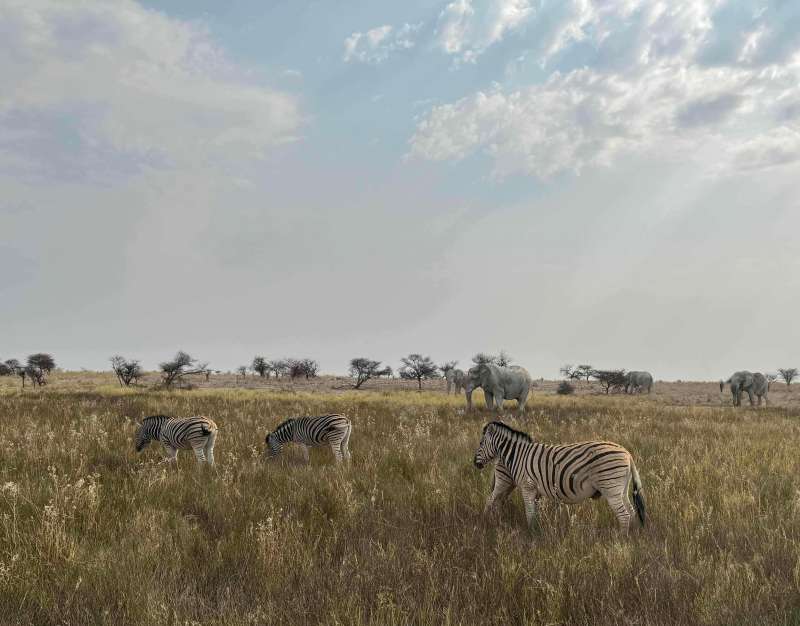
Zebras and elephants ,Etosha National Park Namibia

View from our car in Etosha National Park


Extras.  Whilst the two below are in Botswana, they make it onto most itineraries due to their proximity, the ease of doing a loop to get there and their sheer wow factor.


Itinerary Options

Namibia is a big place with a lot to see and realistically you are going to getting around by road.  So driving is all part of the fun, but takes a lot of time.  I’ve listed below 3 itinerary options ranging from the only have a week option to full-blown taking on the loop of Botswana aswell.  We did the later, although over a bit more time.


Itinerary option #1 – supercharge one week


27 hours, 2250km / 1400 miles over 7 days.  All the highlights of Namibia (excluding Fish River Canyon far to the south).  Doable, but super busy:


Day 1 – Land Windhoek and depart on the same day for Sossusvlei (there is little point staying in Windhoek other than to rest after a long journey) – 3 / 4 hour drive.  Stay either around Sesriem (preferred) or Solitaire (if struggling with availability / price)

Day 2 – Enjoy Sossusvlei

Day 3 – start early and drive through the wonderful desert mountains on the way to the Skeleton Coast – 6 hour drive.  Have a late lunch at the Cape Cross Lodge and see the seals at Cape Cross Seal Reserve in the late afternoon.  If super ambitious, drive further up to the Skeleton Coast Park and visit some more of the ship wrecks, but otherwise stay around Hentiesbaai.  The Skeleton Coast is all about the drive along the coast from Swakopmund to into Skeleton Coast Park, so once you’ve experienced that, its quite samesie after that

Day 4 – drive into Damaraland, via the Brandberg Mountain to see the White Lady San People painting and walk through the valley – 4 hour drive.  Stay around the Twyfelfontein area

Day 5 – take the Twyfelfontein Elephant Drive in the morning to see the desert elephants and for amazing views of the giant mountain basin you’re in, and then drive up to the southern entrance for Etosha – 4 hour drive

Day 6 – early morning start to enter Etosha in the early morning when the animals are most active.  Drive through the park in the day, to arrive at the primier water holes in the east of the park for the late afternoon again when the animals are most active, and stay in Mobutu Etosha which is beautiful and allows you to quickly enter the park the next day.  Drive time 4 hours

Day 7 – enter back into the park to see the animals in early morning at the waterholes of Chudop, Koinachas and Klein Namutoni Fountain.  Drive back down to Windhoek – 5 hour drive


Itinerary Option #2 – same as above but spread over 10-14 days

27 hours, 2250km / 1400 miles over 12 days.  All the highlights, but more civilised:


Day 1 – Land in Windhoek and stay at the Weinberg Hotel, which is the best place to stay in Windhoek without the prices of the more central area.  Eat at Olivia’s Kitchen for good food and a nice chilled atmosphere

Day 2 – set off for Sossusvlei, enjoying the wonderful mountain scenery on the way – 3 / 4 hour drive.  Stay for 2 nights in Sesriem if you can get the availability (and want to see the sunrise)

Day 3 – early start to get to the top of one of the dunes for sunrise, followed by walking to see the hidden vleis such as Deadvlei or Sossusvlei itself, and end with a walk along the Sesriem Canyon floor.  Highlight though is the general drive along the red strip of towering dunes from your base in Sesriem to Sossusvlei

Day 4 – drive up to the Skeleton Coast via the wonderful desert mountains of the Namib-Naukluft National Park, stopping briefly to stare across then Kuiseb Canyon – 5 hour drive.  Stay for 2 nights in either Swakopmund or Hentiesbaai

Day 5 – have a leisurely morning (you can’t see much until around 10am) and drive along the Skeleton Coast until around 50km into Skeleton Bay Park, enjoying the rolling waves battering into the remote shore and its ship wrecks, then turn back for a late lunch at Cape Cross Lodge followed by the Cape Cross Seal Colony nearby

Day 6 – drive into Damaraland, via the Brandberg Mountain to see the White Lady San People painting and walk through the valley – 4 hour drive.  Stay for 2 nights at Lodge Damaraland

Day 7 – take the Twyfelfontein Elephant Drive in the morning to see the desert elephants and for amazing views of the giant mountain basin you’re in.  Take the afternoon to see the nearby Petrified Forests and relax by Lodge Damaraland’s pool

Day 8 – drive up near the south entrance of Etosha National Park for a night at Okutala Etosha Lodge – drive 3 hours.  The lodge itself is worth the afternoon with its waterhole right by the restaurant, complete with rhinos, elephants and all antelope you could want

Day 9 – enter Etosha early via the Okaukuejo southern gate so that you can see the animals at their most active.  Spend the day driving through the park from west to east, stopping in the day at the Rietfontain Fountain and Etosha Pan Lookout, and aiming to finish in the late afternoon at Chudop, Koinachas and Klein Namutoni Fountain – 4 hours driving (if getting tired in the middle of the day, head straight to Mobutu Etosha for a chill before catching the cooler temperature in the late afternoon by the waterholes).  Stay 2 nights at the Mobutu Etosha which has beautiful grounds, and allows easy access to the park the next day

Day 10 – be sure to enter the park early to see the animals in the park’s eastern waterholes, then return to the hotel for a leisurely lunch and relaxed day.  See how you feel if keen to head back in the later afternoon

Day 11 – drive back to Windhoek.  Drive time 5 hours.  Stay at the Weinberg Hotel

Day 12 – depart from Windhoek


Itinerary Option #3 – Namibia + Okavango Delta & Kalahari in Botswana


43 hours, 3500km / 2715miles.  Big upgrade, the real highlights of SW Africa, but more time commitment:


Day 1 – Land in Windhoek.  Make your way to Sossusvlei – 3 / 4 hour drive – stay in Sesriem.

Day 2 – early start to get to the top of one of the dunes for sunrise, followed by walking to see the hidden vleis such as Deadvlei or Sossusvlei itself, and end with a walk along the Sesriem Canyon floor.  Highlight is the general drive along the red strip of towering dunes from your base in Sesriem to Sossusvlei.

Day 3 – drive up to the Skeleton Coast via the wonderful desert mountains of the Namib-Naukluft National Park, stopping briefly to stare across then Kuiseb Canyon – 5 hour drive.  Stay over night in Hentiesbaai.

Day 3 – drive up the Skeleton Coast until around 50km into Skeleton Bay Park, enjoying the rolling waves battering into the remote shore and its ship wrecks, then turn back for a late lunch at Cape Cross Lodge followed by the Cape Cross Seal Colony nearby.

Day 4 – drive into Damaraland, via the Brandberg Mountain to see the White Lady San People painting and walk through the valley – 4 hour drive.  Stay at Lodge Damaraland.

Day 5 – take the Twyfelfontein Elephant Drive in the morning to see the desert elephants.  Leave that afternon for the south entrance of Etosha National Park for a night at Okutala Etosha Lodge – drive 3 hours.  The lodge itself is worth the afternoon with its waterhole right by the restaurant, complete with rhinos, elephants and all antelope you could want.

Day 6 – enter Etosha early via the Okaukuejo southern gate so that you can see the animals at their most active.  Spend the day there.  Stay at the Mobutu Etosha.

Day 7 – enter the park early to see the animals in the park’s eastern waterholes, then drive to Bwabwata National Park in the Divundu Strip. 6 hours drive.

Day 8 – spend the morning checking out a safari where you will see very few fellow tourists, and then drive into Maun in Botswana. 5 hour drive

Day 10-12 – safari through the Okavango Delta and Kazikini Game Reserve.

Day 13-15 – drive down to the Central Kalahari Game Reserve to experience the desert environment, hear black-maned Kalahari lions.

Day 15 – depart for Windhoek. 7 hours.
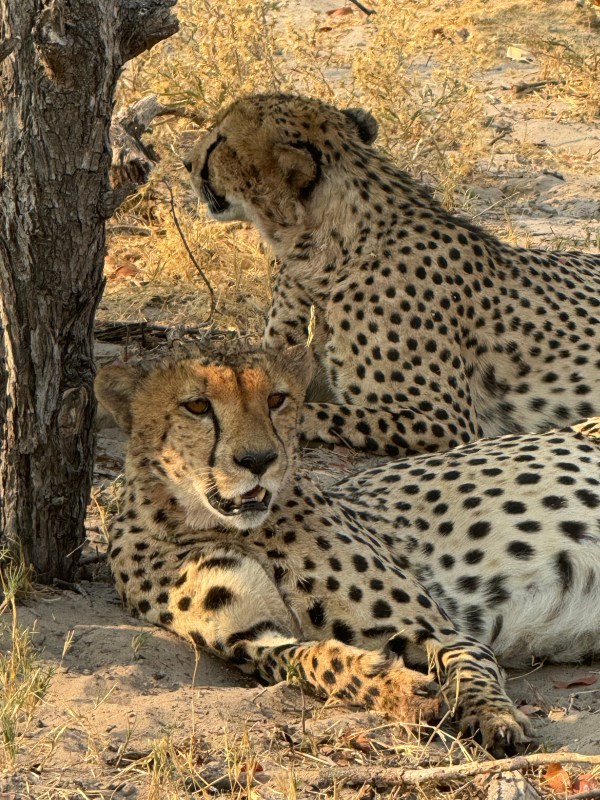
 

Cheetahs resting in the Okavango Delta, Botswana

The animal wonders in the Okavango Delta


Central Kalahari - desert experience with the San people, Botswana

Central Kalahari – desert experience with the San people


Continue down to Fish River Canyon?

Everyone we met said they enjoyed it for the view, but, unless you’re either taking the time to walk through the canyon (sounds fantastic) or on that route anyway, it probably wasn’t worth the 15 hour round trip.  We’d done a hell of a lot of driving after driving also through Botswana, and had seen some incredible gorges along the way, so didn’t.


 

Driving in Namibia


The Roads

You should drive this yourself.  The roads in Namibia are good quality, people very helpful and welcoming, it is a safe country (especially for Africa) and there is decent infrastructure throughout – typically not further than an hour from a petrol station, good cell coverage etc.  Plus, you will see heaps of other people in rental cars driving a very similar route – it is very much “the thing to do”. 

The only thing that throws you a little is that quite a few of the roads are categorised as “D” (vs the better “B” and “C).  They are fine for all types of car, but can get a little bumpy and can mean the drives are more tiring than tarmac / concrete roads where you can sit on 120km / 75mph comfortably.  The main areas where this is the case are around Damaraland, the road to Sossusvlei, and within Etosha.  This is where having the 4WD gives you a bit more confidence and comfort – typically you can drive faster on these roads vs a 2WD.


Elephant road sign Damaraland, Namibia

Road signs throughout Damaraland


Hiring a car

You’ve broadly got 3 options:

1. Renting via one of the specific 4WD companies for a vehicle that will typically come ready for off-roading camping.  Typically US$110 – US$220 per day (at this time of year, which is high season, and in 2025 prices).

2. Renting a 4WD from a standard car rental company – typically US$90 – US$120 per day.

3. Renting a standard car from a standard car rental company – typically start from US$35 per day.

We left the booking late, so found availability limited.  The price from the specific 4WD adventure companies were getting a bit silly at US$220 per day, so we went with a Toyota Hilux from Hertz in Windhoek Airport for US$2150 for 23 days (US$95 per day), which was perfect for what we needed. 

But, honestly – if you’re just sticking to the roads, budget-focused and don’t mind getting car-envy at all the grunty 4WDs next to you – a standard car would 100% do the job.


When to go

Aim for May to October as there is drier weather, clear skies, better road conditions and better wildlife viewing – the animals are more concentrated on waterholes and thinner bush. We visited in September and it was perfect.

But bear in mind that Namibia, at the time of writing in 2024, has had near 8 years of drought.  It would in many ways be wonderful to see, in particular, northern Namibia for the first rains.  


Experiences Nearby

The below map shows experiences nearby with a colour that reflect the Overall Score of those experiences

Score Detail

The scores above are the real point of this site.

Over 20+ years and 100+ countries, I’ve tried to rank the world’s best travel experiences — from genuinely mind-blowing ⭐⭐⭐⭐⭐ to the properly gash.

Every one of the 500+ places on this site has both a Wow Factor rating and a more analytical Travel Experience (TE) score based on the things that actually make travel memorable.

If you're curious about the thinking behind it, head to the About page.

Otherwise, explore the map above or on the Home page and see which places truly deliver maximum wow.

Leave a Reply

Your email address will not be published. Required fields are marked *