5 days road trip through Hokkaido’s eastern wilderness in summer
Nature
The wow factor for nature - does it show nature at its best? Doesn't need to be the wildebeest migration or diving with hundreds of hammerheads. Rather make you pause as you realise just how awesome the natural world can be
7
Culture
How much does this experience showcase some of the better and finer things that us humans can offer? Sure, it can be ancient ruins and renaissance churches, but it can also be festivals or soaking up some of the great modern cities of the world
6
Fun factor/activity
Very simple - was it fun? This is usually linked in with doing some kind of activity - i mean, walking along some cliffs is nice, but paragliding from them, now that is fun. Its a vastly underrated factor in a truly great experience
7
Avoid the crowds
Big tour groups and being surrounded by loud fellow tourists can sap the life out of even the greatest of travel experiences. This score is to reflect just how much you can avoid this. But. . . The score also takes into account if the crowds actually add to the experience, such as with a party town or a bustling local market
7
World famous
How world famous is the experience?
4
unique
How hard is it to have a similar experience in other places round the world?
6
Overall TE Score
The overall travel experiences score: fun factor + avoid the crowds + (best of nature or culture) + (best of world famous or unique). Then convert into a score out of 100
How this travel experience ranks compared to all the other experiences on this site, based on the travel experience (te) score
195th/460
Top 40%
continent
Asia
country
Japan
Length of time
3-4 days
Typical daily price
This gives you a rough idea of the daily price based on 2 people travelling where they can split costs like accommodation. It excludes travel there and back, and factors in inflation
the numbers in brackets show the price range for the full time of the experience (so not necessarily daily). It is a range to reflect different budget vs higher end
$40 (typically $30 - $50)
Time of year visited
July
All Tags
Wow Factor
Two scores: first is the wow factor which ranges from ⭐️ ⭐️ ⭐️ ⭐️ ⭐️ to ⭐️, and a separate category for the truly "gash". The second is the more analytical travel experience score, which considers 6 varied criteria to give an overall score out of 100.
⭐⭐⭐
Summary
It’s a different world up in Hokkaido. Japan’s northern island holds 20% of the country’s land but only 5% of its people, so you get a feeling of genuine remoteness that’s increasingly hard to find anywhere . . . let alone in Japan. And it all comes wrapped in the efficiency, superb road infrastructure, wonderful manners and knock-out food that come with any trip to Japan. Remote wilderness where everything just works – a rare combo.
Here’s the thing though – the vast majority of visitors stick to the classic spots in the west: Niseko for the skiing, Toya-ko for the Windsor Hotel views and Furano for the flowers. Head east of Sapporo and you’ve ticked the adventure box ahead of 90% of your fellow travellers before you’ve even started. Once you do, expect HUGE national parks, volcanoes, dramatic gorges, small onsen towns, views across the water to Russia and somewhere north of 10,000 brown bears.
Honestly, the feeling of being able to just point the car at the Hokkaido mountain and forest wilderness is worth the trip alone.
Highlights of the trip
#1 The drive itself – quiet roads and nothing but beautiful forest and mountain wilderness ahead of you
#2 Shiretoko’s boat trip up the coast to the “end of the world” – dramatic cliffs, waterfalls and the odd bear on the shoreline
#3 The pretty valleys all around Daisetsuzan National Park, the rooftop of Hokkaido
#4 The onsens – just about every place has an outdoor one, and finishing each day in them is magical
#5 The easy walks all around Shiretoko – in this case the stunning Shiretoko-go-ko five lakes
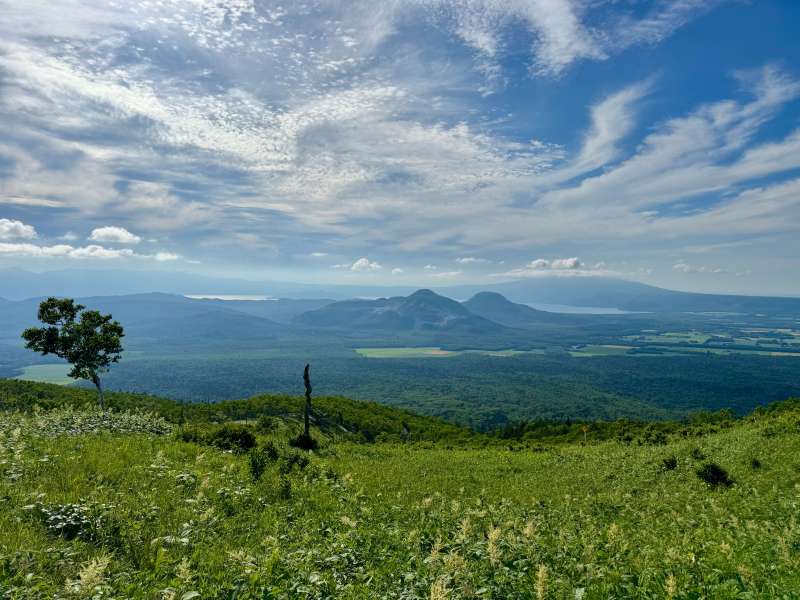
#6 The views of the volcanoes and caldera lakes through Akan-Mashu National Park
#7 The wildlife – deer and foxes everywhere . . . and enough bears that they dictate where you can walk
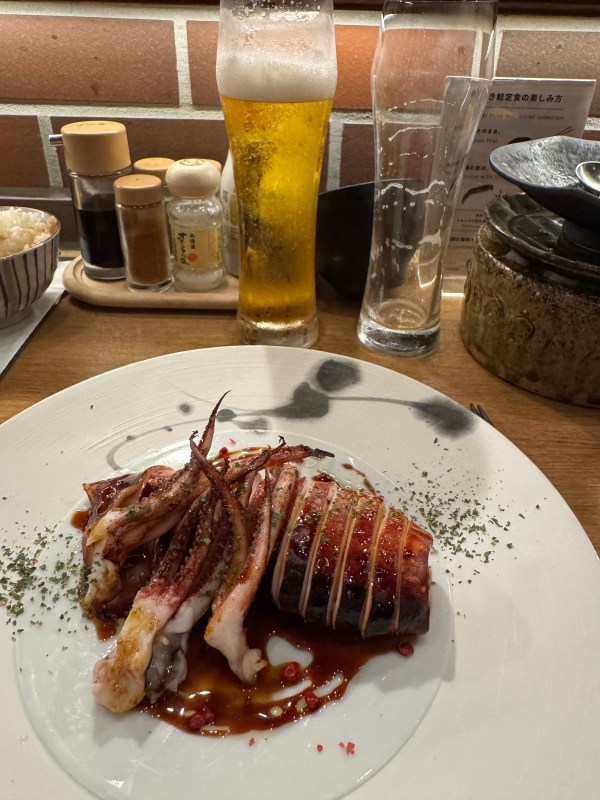
#8 Obviously, the food. It’s Japan – even the konbini stops are good
The route I took
The wilderness circuit sits to the east of Sapporo. The route is essentially linear (looks like a loop because you’ll probs want to take the southern route back to the airport for variety) – you fly into Sapporo (New Chitose Airport), pick up a car and work your way east through three national parks:
Daisetsuzan National Park – “the rooftop of Hokkaido”. Japan’s largest national park, with a cluster of 2,000m volcanic peaks, ropeways and pretty onsen valleys. Around 3.5hrs from the airport.
Akan-Mashu National Park – volcanoes, caldera lakes and steaming vents that you pass through on the way east. Worth time on its own if you have it.
Shiretoko National Park – the long peninsula sticking out of the far north east corner, known to the local Ainu people as “the end of the world”. One of only two UNESCO World Heritage Sites in Hokkaido, and considering how far away it is, it really does have that end-of-the-world feel.
Because the route is linear, it’s less a question of “which one should I do?” and more “how far east do you want to go?”. For what it’s worth, I’d say all three have the wow factor, with Shiretoko just nudging #1, then Daisetsuzan, then Akan-Mashu.
Rough itinerary
Day 1 – land at Sapporo (New Chitose) in the afternoon, pick up the car and drive to Sounkyo Onsen in Daisetsuzan National Park (around 260km / 3.5hrs, expressway most of the way)
Day 2 – full day for Daisetsuzan: Kurodake ropeway and chairlift, the climb to the caldera rim, the Milky Way falls and wandering the village
Day 3 – drive east through Akan-Mashu National Park to Utoro in Shiretoko (around 250km / 4.5-5hrs with stops for the lakes and viewpoints)
Day 4 – full day for Shiretoko: the boat cruise up the peninsula, plus do both the Five Lakes walk and the Nature Centre walk (each only an hour or so)
Day 5 – start the long drive back west and break the journey with an overnight stop (Utoro back to Sapporo is a chunky 400km+ / 6.5-7hrs of driving, so give yourself the day in between . . . a good excuse for a second bite at Akan-Mashu if you didn’t get decent weather first time)
Day 6 – finish the drive to Sapporo / New Chitose and fly out
All in that’s around 950km and 15 or so hours behind the wheel across the 6 days – and it didn’t particularly feel rushed when a big part of the enjoyment is the driving itself. But you can obviously easily extend.
Daisetsuzan National Park – the rooftop of Hokkaido
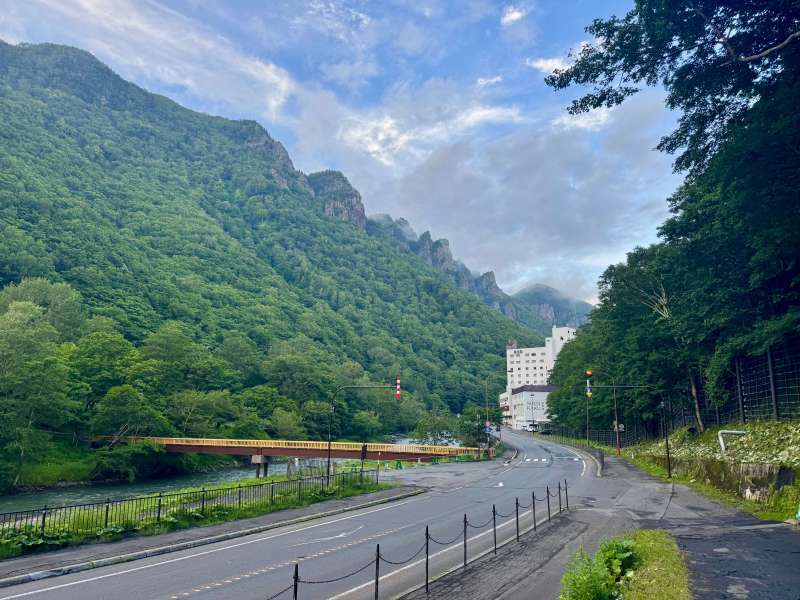
I stayed on the east side of the park at Sounkyo Onsen – basically a collection of big onsen hotels dotted around a very pretty gorge valley, with a small village in the middle that has a surprisingly nice main street area. The hotels are a tad pricey, so I’d actually recommend the Sounkyo Hostel (around £60 / US$80 a night for a 6-person private room, including food . . . dorms also a far cheaper option) which sits right next to the Hotel Taisetsu. The Taisetsu has a beautiful interior and 3 separate onsen areas – including an outdoor one on the top floor with incredible views down the valley – and you can use it as a non-guest for around ¥500 / US$3. Bargain.
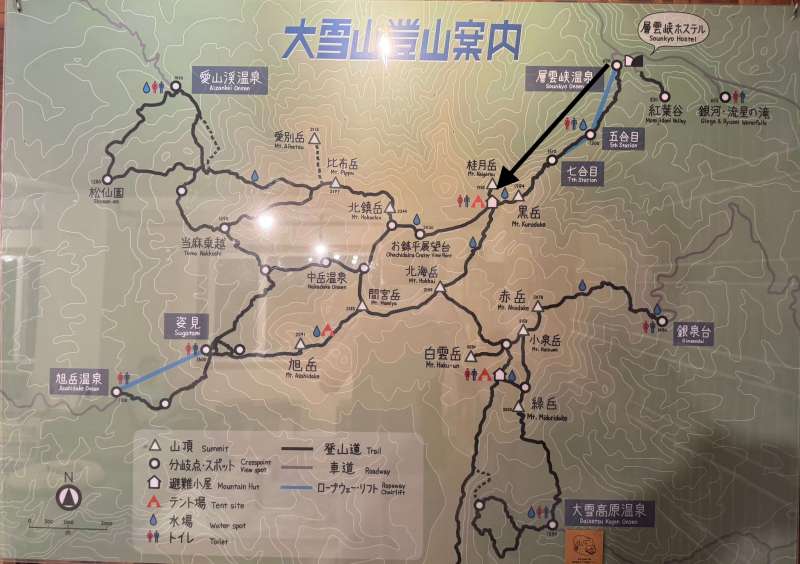
Map showing the main hiking routes of Daisetsuzan National Park and route from Sounkyo Onsen to caldera rim
The Kurodake ropeway takes you from the village up to the mountain views at 1,300m, then a chairlift to 1,520m, and from there, if feeling adventurous, you can climb to the summit of Kurodake at 1,984m (beware, it’s a bloody slog though). I took both lifts and then climbed the hour or so up to the caldera rim and on to Kurodake-ishimuro, the only spot up there with shelter and a little shop. Only around 10-12k steps in total, but it’s a steep, pretty tough climb – my phone claimed 160 floors. Ropeway plus chairlift combo is ¥3,900 / US$25 (2026).
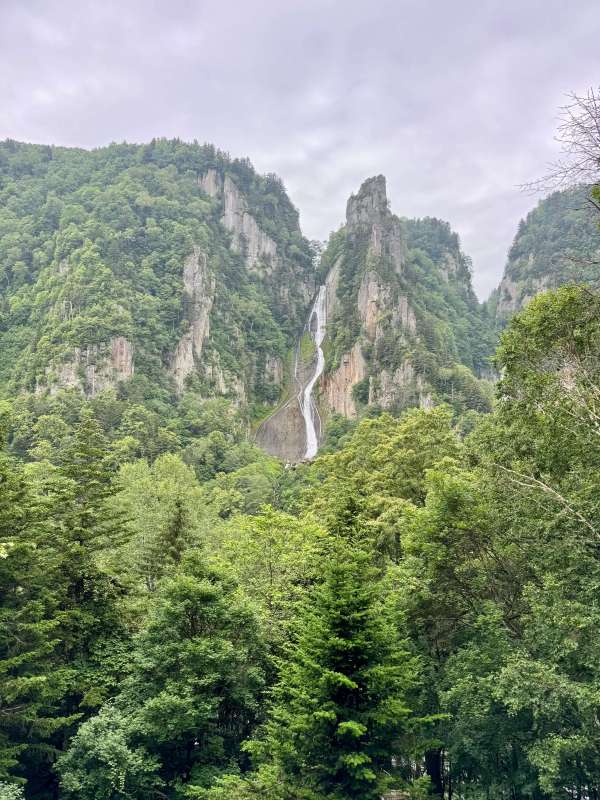
Ginga-no-taki (Milky Way) falls
Don’t miss the Ginga-no-taki (Milky Way) falls – only 5mins drive from the village and well worth the look.
Give it 2 nights – you’ll take a full day with the hike and wandering the village. The alternative base is Asahidake on the west side of the park, which also looked really nice and has its own ropeway, but it’s much smaller and the accommodation was spenny.
Akan-Mashu National Park
You pass through Akan-Mashu on the drive between the other two parks – volcanoes, caldera lakes and steaming vents. A word of warning on the Hokkaido weather: the first time I passed through I was so deep in cloud I couldn’t see a thing. On the return leg it was stunning. You could easily spend a couple of days here if you have the time.
The spots worth building the drive around:
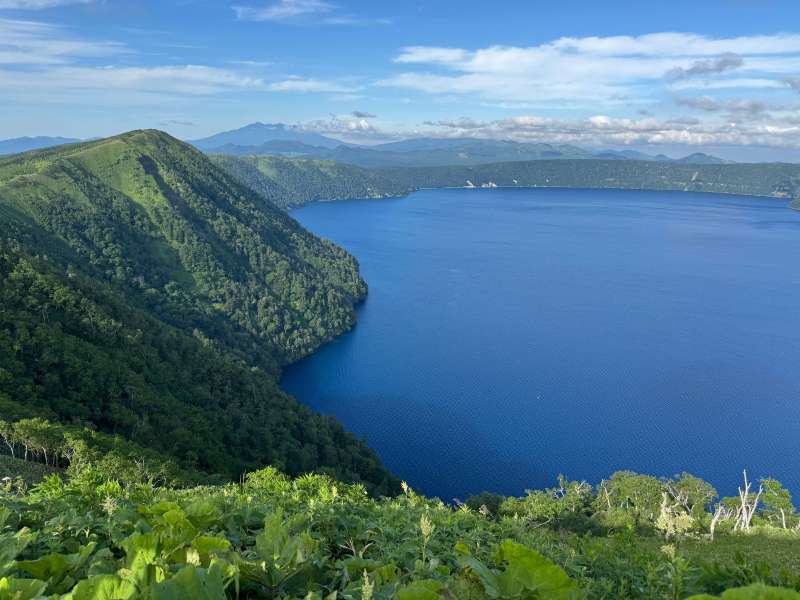
Lake Mashu Observatory No.3 – fab views over the volcanic lake (one of the clearest in the world) and right across the surrounding area. The pick of the viewpoints.
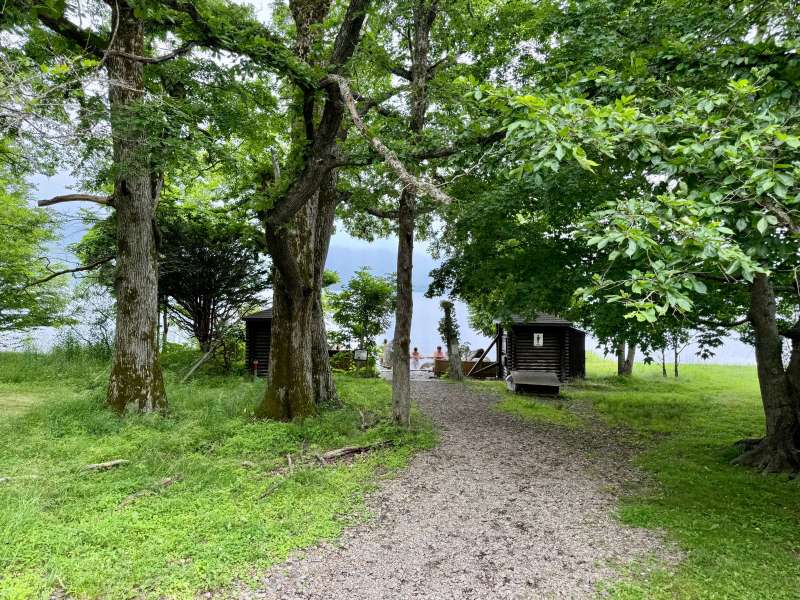
Kotan Onsen on Lake Kussharo – an outdoor hotspring right on the lake shore, so you can flip between the cold lake and the hot onsen. Superb.
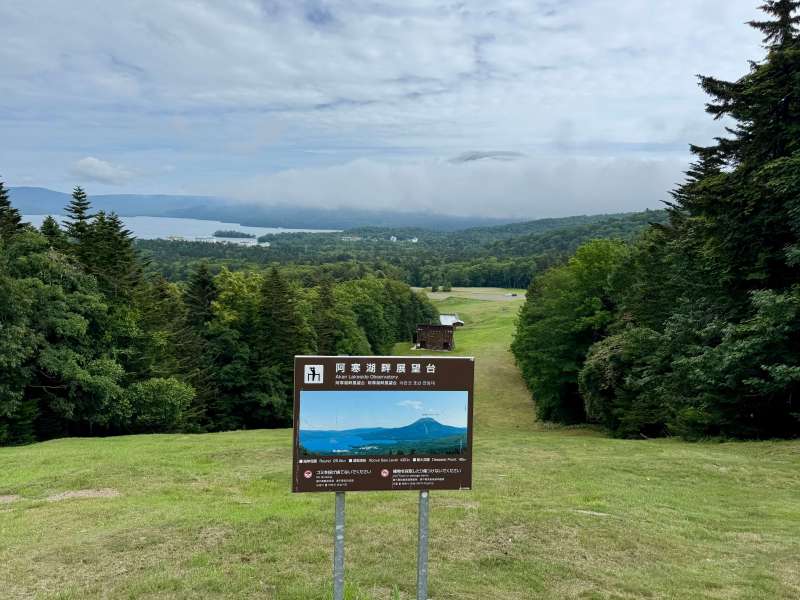
Lake Akan Observatory – in truth just a bench on a ski slope, but with great views across the volcanoes.
If you’re struggling for ideas on how to piece it together, the Akankohan Visitor Centre is good for maps and pointers.
Shiretoko National Park – the end of the world
Probably the highlight of the trip. There are quite a few less tourists out here than the other parks, but they do cluster together a bit – the road system is very simple and there are only a couple of places where you can easily walk (the main issue with heading off on your own being that there really are a hell of a lot of bears around). The two easy walking options:
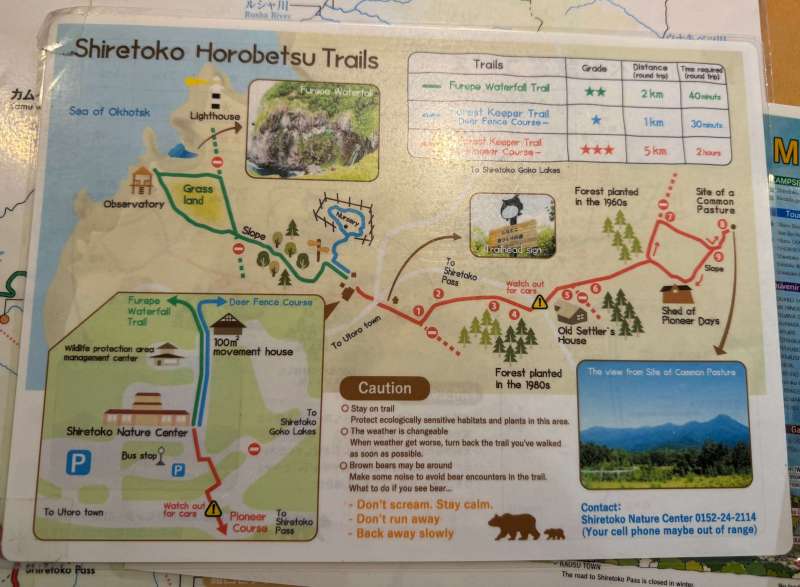
The nature centre walk – a 45min walk right next to the Shiretoko Nature Centre, surprisingly nice, taking you down to the sea and the dramatic cliffs.
Shiretoko-go-ko (the five lakes) – stunning. You can walk the raised boardwalk right next to the visitor centre for free (actually pretty beautiful in its own right), or take one of the guided loop walks – roughly 1.5hr, 2hr and 3hr options touching more of the lakes. I did the full 3-hour walk and it was really nice and I learned a lot, but be warned it’s done in a very slow, very Japanese style . . . 3 hours to walk 3km. If you’re a bit impatient like me, go for one of the shorter loops at your own pace or just do the boardwalk. Around ¥5,500 for the guided walk in bear season (2026).
The overall highlight though wasthe cruise. Plenty of options and timings – there’s a shorter 2hr version that noses into some of the river mouths looking for bears, which would have been cool – but I did the longest cruise (around 4hrs, roughly ¥8,800 in 2026) with Aurora, on a big, well-equipped boat that runs the full west side of the peninsula all the way to the cape. The views are just spectacular. Allocate the time for it.
Stay in Utoro – a nice little town with decent restaurants and waterfront views. I really struggled to get accommodation, so ended up at the Hotel Shiretoko, which was actually fine and had the most beautiful views and an amazing outdoor onsen. Just bear in mind it’s a classic old-school Japanese hotel – no English, and the bathroom looks like it belongs on a basic cross-Channel ferry. All part of the charm.
The wildlife
Hokkaido is properly crawling with wildlife, and it becomes a real part of the trip:
Deer – LOADS of them, especially through Daisetsuzan National Park. You’ll be regularly slowing the car for them.
Foxes – plenty of these too, often just trotting along the roadside without a care.
Bears – the big one. These are proper brown bears (higuma) – same family as the grizzly and only a bit smaller – not the smaller black bears of Japan’s main island. I saw evidence of them everywhere: paw prints, claw marks up the trees, flattened feeding areas. But I only clapped eyes on one the whole trip – roaming one of the beaches, seen from the safety of the cruise. Which, to be honest, is exactly how you want to see one.
General Tips
1. Hokkaido is mega weather-dependent – I had two days almost entirely inside cloud in the mountains, and the rest was stunning blue skies. You’ve got to roll the dice, even in summer.
2. Summer conditions – I’d describe it as dry and cool-to-slightly-warm. Some days hit a genuinely warm 28°C, but it’s a good deal cooler up in the mountains, especially when you get up to the peaks – see the videos of snow!
3. The driving is the experience – a big chunk of this trip is the drive itself: quiet roads, forest, mountains. So the itinerary above never felt like too much time in the car. One catch – the speed limits. The expressways are fine, but the smaller roads through the national parks are typically 50km/hr, so distances take longer than they look.
4. The car hire basics – nothing complicated, but three things to know. Firstly, you’ll need an International Driving Permit (the 1949 convention version) alongside your normal licence – Japan won’t rent to you without it, so sort it before you fly (a handful of nationalities – Germans, French and Swiss among them – need an official translation of their licence instead). Secondly, get the ETC card offered with the rental – you glide through the toll gates and settle up when you return the car. Thirdly, it’s Japan – the car will be immaculate, the process painless and the roads a pleasure.
5. Finish every day in the onsen – just about every place has one, often outdoors, and they really are one of the highlights of the whole trip. The places I stayed at above had brilliant onsens, so give them a go.
6. Mega early mornings – Japan doesn’t do daylight saving, so in summer first light is around 3am and it’s dark by 7.30pm. Lean into it – early starts get you the trails and viewpoints to yourself.
7. Ignore the Sounkyo food warnings – I’d read up beforehand and a lot of places pushed the need to bring food to Sounkyo Onsen because “everything closes”. It doesn’t. There are restaurants in the village and the hotels do food.
Costs
I went in July 2026 and the whole thing felt quite cheap for Japan, with accommodation the main spend. Per person, two sharing, for the 6 days / 5 nights:
Accommodation around US$250
Car hire around US$160 each (¥47,000 for the week), petrol around US$45 and tolls US$25 each
The big three activities around US$120 (Kurodake ropeway + chairlift ¥3,900, guided five lakes walk ¥5,500, 4hr cruise around ¥8,800)
Food around US$235 (roughly US$40 a day eating in restaurants)
All in around US$830 each, call it US$140 a day. For a week’s adventure in Japan, that’s a bargain.
How does this compare to the classic Hokkaido trip?
Most Hokkaido visitors are there for the famous western spots, and to be clear they’re good – but they’re a different kind of trip. If you’re weighing it up:
The wilderness road trip (this entry) – remoteness, national parks, onsens and adventure. The only version of Hokkaido where you get that end-of-the-world feeling. Wow factor ⭐️⭐️⭐️
Skiing in Niseko – world-famous powder and a very international resort scene. Winter only, and a completely different holiday. Wow factor ⭐️⭐️⭐️
Furano’s flower fields – the summer postcard shot of Hokkaido. Pretty, but busy – and you drive within reach of it on this route anyway. Wow factor ⭐️
If it’s your first time in Japan, the big hitters further south still come first – see A week in Japan from Tokyo, to Mount Fuji and Kyoto Wow factor ⭐️⭐️⭐️⭐️. But if you’ve done the classics and want to see a completely different Japan, this is the trip.
Experiences Nearby
Wow Factor Score Two scores: first is the wow factor which ranges from ⭐️ ⭐️ ⭐️ ⭐️ ⭐️ to ⭐️, and a separate category for the truly "gash". The second is the more analytical travel experience score, which considers 6 varied criteria to give an overall score out of 100.LowHigh
Over 20+ years and 100+ countries, I’ve tried to rank the world’s best travel experiences - from genuinely mind-blowing ⭐⭐⭐⭐⭐ to the properly gash.
Every one of the 500+ places on this site has both a Wow Factor rating and a more analytical Travel Experience (TE) score based on the things that actually make travel memorable.
If you're curious about the thinking behind it, head to the About page.
Otherwise, explore the map above or on the Home page and see which places truly deliver maximum wow.
Join the newsletter for new travel experiences, fresh rankings, personal notes, and stories from the archive — sent only when there’s something worth sharing.