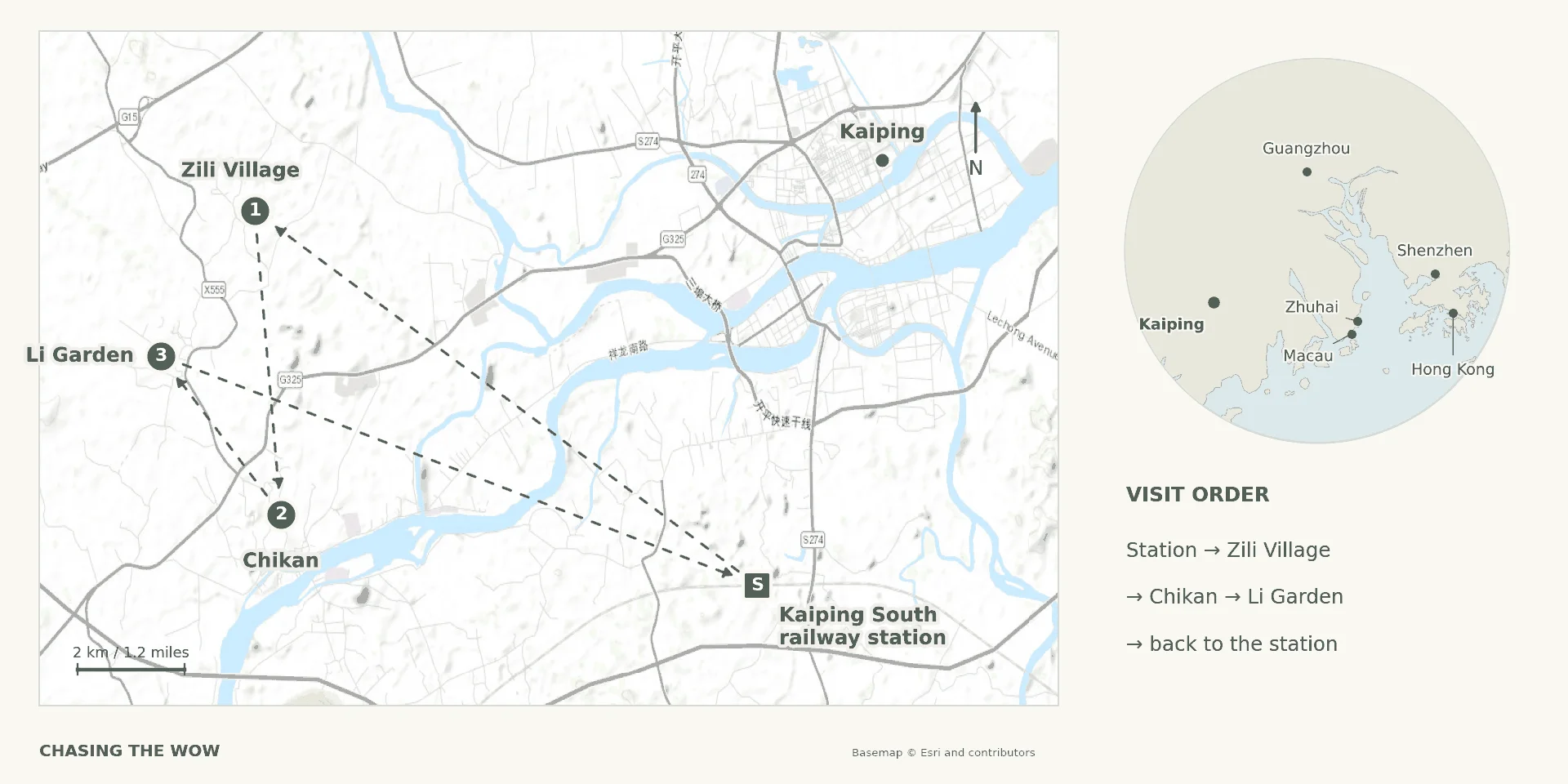
A diaolou tower rising above green rice fields in Zili Village, Kaiping.

Kaiping day trip: Zili watchtowers, Li Garden and Chikan

Nature
The wow factor for nature - does it show nature at its best? Doesn't need to be the wildebeest migration or diving with hundreds of hammerheads. Rather make you pause as you realise just how awesome the natural world can be
6
Culture
How much does this experience showcase some of the better and finer things that us humans can offer? Sure, it can be ancient ruins and renaissance churches, but it can also be festivals or soaking up some of the great modern cities of the world
7
Fun factor/activity
Very simple - was it fun? This is usually linked in with doing some kind of activity - i mean, walking along some cliffs is nice, but paragliding from them, now that is fun. Its a vastly underrated factor in a truly great experience
6
Avoid the crowds
Big tour groups and being surrounded by loud fellow tourists can sap the life out of even the greatest of travel experiences. This score is to reflect just how much you can avoid this. But. . . The score also takes into account if the crowds actually add to the experience, such as with a party town or a bustling local market
6
World famous
How world famous is the experience?
6
unique
How hard is it to have a similar experience in other places round the world?
7
Overall TE Score
The overall travel experiences score:  fun factor + avoid the crowds + (best of nature or culture) + (best of world famous or unique). Then convert into a score out of 100
65 *What the scores mean and where do they come from
RANKING
How this travel experience ranks compared to all the other experiences on this site, based on the travel experience (te) score
234th/463
Top 50%
continent
Asia
country
China
Length of time
1 day or less
Typical daily price
This gives you a rough idea of the daily price based on 2 people travelling where they can split costs like accommodation. It excludes travel there and back, and factors in inflation the numbers in brackets show the price range for the full time of the experience (so not necessarily daily). It is a range to reflect different budget vs higher end
$110 (typically $60 - $150)
Time of year visited
November
Primary Tags
Click on any of the tags to see all travel experiences with the same tag
Wow Factor
Two scores: first is the wow factor which ranges from ⭐️ ⭐️ ⭐️ ⭐️ ⭐️ to ⭐️, and a separate category for the truly "gash". The second is the more analytical travel experience score, which considers 6 varied criteria to give an overall score out of 100.
⭐⭐⭐

Summary

Kaiping is famous for its emigrants – generations of residents left for far-flung places all around the world over the past 200 years and returned with money, cultural ideas and different architecture style ideas. The result is a landscape littered with watchtowers, UNESCO-listed villages, the super impressive / odd town of Chikan, and some genuinely emotional stories that will stay with you.

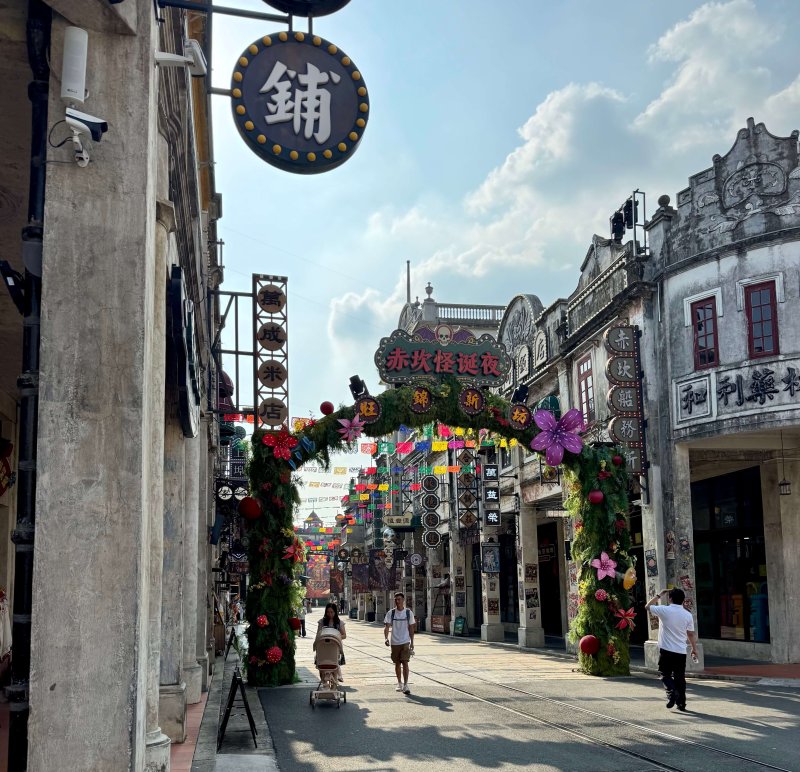
Street in Chikan lined with historic arcaded buildings, with tram tracks running along the road.

Walking the streets of the bizarre but beautiful Chikan

I was blown away for 3 reasons:

  1. The three focus destinations are wow: the watchtowers of Zili, the gardens of Li Garden and the town / now theme park of Chikan are all worth the visit.
  2. The ease of getting there and around. Direct trains from Guangzhou and Hong Kong, plus super easy + cheap DiDi taxis once there.
  3. The stories attached to the people who went to live overseas: the Australian gold rush, Malaysian rubber plantations, US railroads, New Zealand farming, the Chinese Coolies (bitter strength in Chinese) really got around. The stories they bring home are worth the trip alone.

If in this part of the world, I’d probably suggest to prioritise the likes of the classic highlights of Hong Kong, Macau and certainly the Hong Kong’s hidden highlights first – and the vast majority of tourists will do. But thereafter, get Kaiping on your list: fully deserved ⭐️⭐️⭐️ Wow Factor.

Table of Contents

A bit of history

The buildings make a lot more sense once you understand where the money and ideas came from. Kaiping was a place people left to make a living overseas, then sent money home or returned to themselves.

Think of the emigration story in three overlapping chapters:

  1. Southeast Asia. People from the area were trading and settling overseas from the 16th century, long before the gold rushes. Later generations worked in businesses, plantations and other industries across the region.
  2. The gold rushes. From the mid-19th century, the goldfields of California and Australia drew people hoping to make their fortunes. Poverty and upheaval at home helped push them out.
  3. The railroads. In the 1860s, Chinese workers helped build the western section of the first US transcontinental railroad. Railway work became another major part of the overseas story.

Map of emigrant journeys from the Kaiping region to Southeast Asia, North America, Australia and New Zealand for trade, gold mining and railway work.

The fortified towers, called diaolou, existed before this building boom. They gave families and villages protection from bandits, with the height also useful against flooding. Most of those that survive were built in the early 20th century, when overseas earnings helped pay for the extraordinary mix of Chinese buildings and foreign architectural ideas. Four groups of diaolou and villages were UNESCO-listed in 2007.

Getting there and around

You’re aiming for Kaiping South railway station. To get there, there are heaps  of options, in particular from Guangzhou South, which took me 1hr 15mins. For those new to travel in China, use Trip.com for the tickets – easy to use and all in english.

From Hong Kong, these are the trains I took in November 2026: 08:22 from Hong Kong West Kowloon > Guangzhou South at 09:19; 09:34 from Guangzhou South > Kaiping South at 10:49. The return was direct from Kaiping South at 17:39, arriving at Hong Kong West Kowloon at 19:59. That time window was enough for me.

Getting around when there: download the DiDi taxi app. Super quick, super cheap. I waited less than 5 minutes each time, and the overall cost for 4 journeys was RMB125 (2026 prices). Allow around 20mins for the station legs, but all other trips will be under 10mins.

Map showing Kaiping city, Kaiping South railway station, Zili Village, Chikan and Li Garden, with a circular inset locating Kaiping relative to Guangzhou, Shenzhen, Hong Kong, Zhuhai and Macau.

Kaiping and the three stops, with the wider region in the corner. The arrows show the visit order, not the roads.

One-day itinerary from Hong Kong

This was my timings from Hong Kong in November 2026:

  1. Around 07:45: arrive at Hong Kong West Kowloon for security and immigration (gate closes 5mins before).
  2. 08:22–09:19: train from Hong Kong West Kowloon to Guangzhou South.
  3. 09:34–10:49: train from Guangzhou South to Kaiping South (15min connection).
  4. Zili Village: DiDi from the station (20mins), then 1–1½ hours looking around the village and towers.
  5. Chikan: DiDi to the old town (10mins), then around 3 hours wandering around and getting lunch.
  6. Li Garden: DiDi over (5mins), then around 1 hour.
  7. 17:39–19:59: direct train from Kaiping South to Hong Kong West Kowloon.

The timing: that gives you 6 hours 50 minutes in Kaiping. The full 1½ hours at Zili, 3 hours at Chikan and 1 hour at Li Garden, and the transit times.

Three places to visit

#1 Zili Village – all about the towers

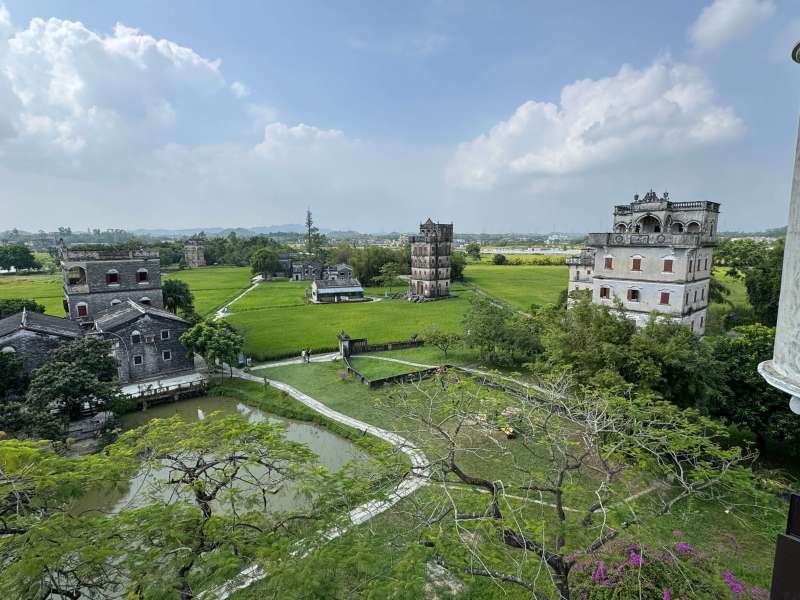
Diaolou towers and villas surrounded by green rice fields in Zili Village, Kaiping.

The view across the rice fields of Zili Village showcasing the dialou towers

Of around 3,000 towers originally built in Kaiping, 1,833 remain. Zili has the main famous cluster of them with 15 (9 diaolou and 6 Western-style villas). Bit like a theme park at the entrance, but once inside, it’s quite cool surrounded by rice fields and jungle. Wander through the towers that are open, read the history of the families and see the views from the top.

Lonely Planet suggests 3 hours there. Fook that would be dull. 1–1½ hours is about right.

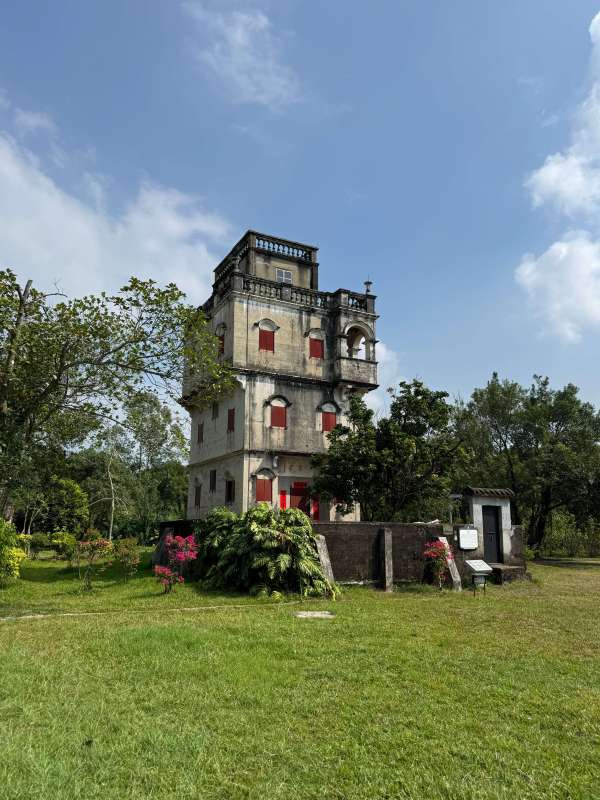
A diaolou tower standing among grass and trees in the Kaiping countryside.

There are heaps of these towers, scattered through the countryside 

#2 Li Garden – bit like a private estate

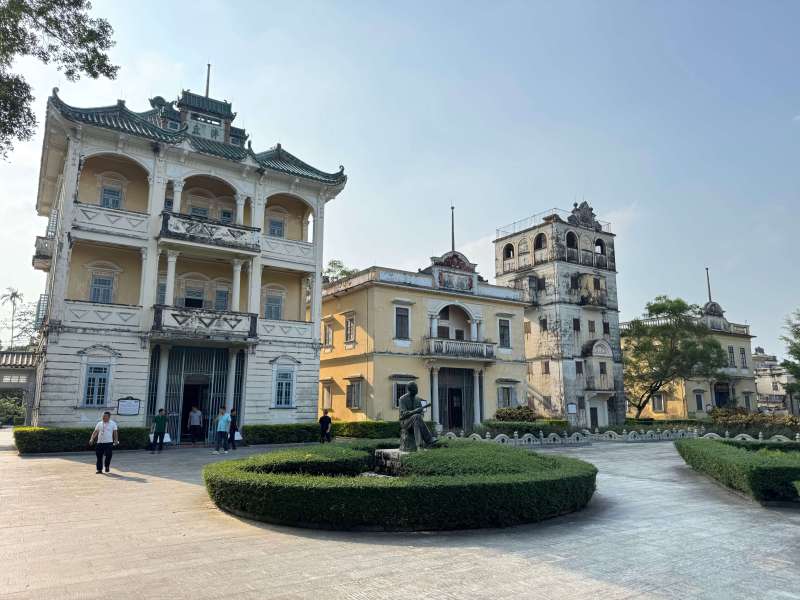
Panli Lou and neighbouring villas overlooking clipped hedges in Li Garden, Kaiping.

The pretty central PanLi Lou that contains the wonderful family stories of Li Garden

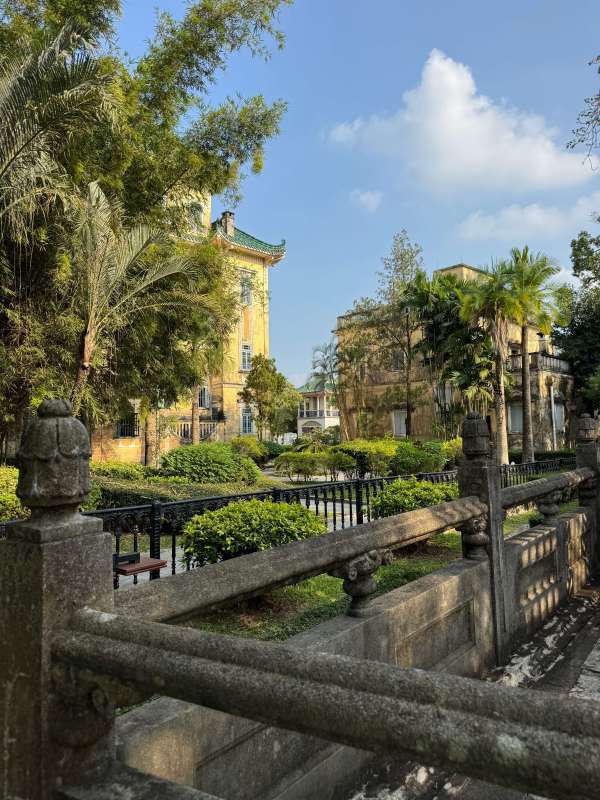
A smaller, more manicured and pretty version of Zili Village. It was built as a private estate by Xie Weili, an overseas Chinese businessman based in the US, between 1926 and 1936. Li Garden does the family stories better than Zili, so be sure to visit the main tower which had a video presentation about the residents adventures that really resonated with me.

Give yourself an hour here.

Stone balustrades, trees and manicured gardens in the Li Garden complex.

Surprisingly beautiful gardens through the Li Garden complex 

#3 Chikan – a magnificent Venice-style town turned into a theme park

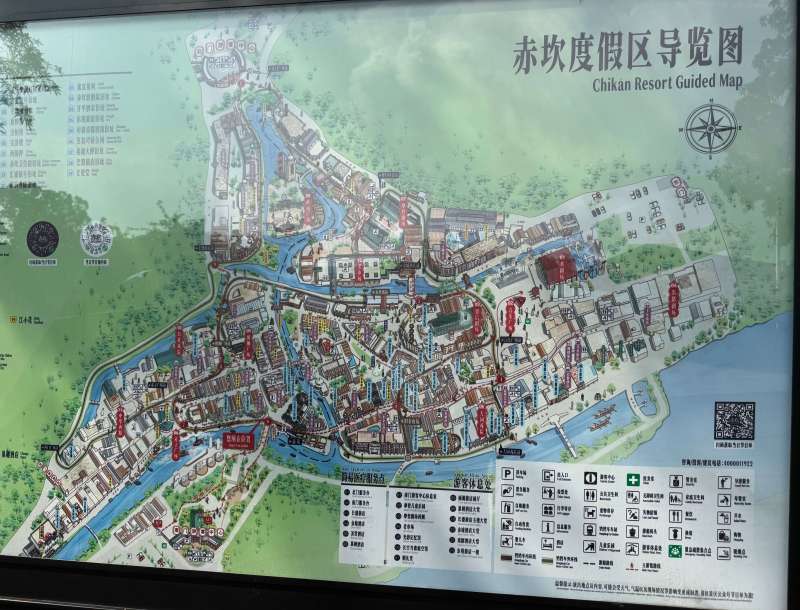
Visitor map showing Chikan's streets, waterways and attractions.

The map to give you an idea of the scale of Chikan

It’s quite hard to describe Chikan. On the one hand, it used to be a magical town that incorporated the very best of the new architecture and know-how that the residents brought home. On the other, the local government and an investment firm redeveloped it, moving residents out to turn the old town into a Disneyland-style theme park.

It must have been magnificent before the development. But, as it happens, it’s still a wow experience mainly because it’s just so bloody big and the original buildings are just so cool that it works. Don’t fall for any negative press, it’s a must visit.

I quite happily spent 3 hours there wandering around and getting lunch (>30 restaurants, so far better than Zili village or Li Garden which were gash for food).

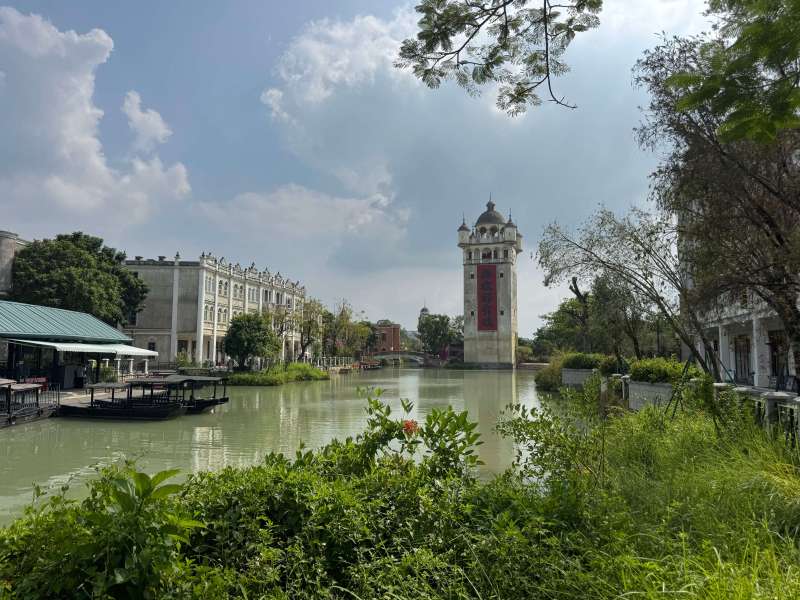
A canal in Chikan bordered by historic buildings, with a tall tower beside the water.

The pretty canals that weave all through Chikan

Decorated gateway and colourful hanging ornaments above a street of historic buildings in Chikan.

Disney land meets Venice in China. All a bit odd 

General tips

Language and faff. The signs and general sophistication of this part of China are a cut above the rest. You’ll find making this journey without any Mandarin super easy. To make sure its easy, do 4 things:

  1. Buy your train tickets on Trip.com, and book the attraction tickets ahead too. For some reason the attractions don’t let you buy the tickets there and instead push you to online. Just use trip.com.
  2. Set up Alipay before you go. Download the regular Alipay app, switch it to English, sign up with your own mobile number and link a supported international Visa or Mastercard.  You don’t need a mainland Chinese bank account or a separate “Alipay international” app. You can then scan the merchant’s QR code or show your payment code. Some places take cards directly, but Alipay makes things a bit easier.
  3. Use DiDi for the taxis. Have the app ready before you arrive.
  4. Make sure your phone has working mobile data in mainland China. Check that your roaming plan covers it. Way easier with it.

Food. The food options in Li Garden and Zili Village are gash. Eat at Chikan.

Cycling. This is often spoken about as a cycling trip. Would be cool for sure, but as I looked round the countryside, it’s probably net-net neutral versus just getting DiDis around, as you get the flexibility and more time in places like Chikan.

How much time. A day is enough. Tad busy, but definitely enough, even from HK. I left West Kowloon at around 8am and was back after doing all of the above at around 8pm.

Go later in the day if you can. I, for example, had Li Garden to myself after 3pm. Chikan, though, will probs be busy at all times.

Time of year. I went in November, so the weather was absolutely perfect. I genuinely felt at times like I was walking through India, but without the mess and the chaos.

Experiences Nearby

Wow Factor Score Two scores: first is the wow factor which ranges from ⭐️ ⭐️ ⭐️ ⭐️ ⭐️ to ⭐️, and a separate category for the truly "gash". The second is the more analytical travel experience score, which considers 6 varied criteria to give an overall score out of 100. LowHigh
  • Elite, unmissable
  • World-class, downsides
  • Meets the Wow Factor
  • Worth it
  • Meh
  • Gash

Score Detail

The scores above are the real point of this site.

Over 20+ years and 100+ countries, I’ve tried to rank the world’s best travel experiences - from genuinely mind-blowing ⭐⭐⭐⭐⭐ to the properly gash.

Every one of the 500+ places on this site has both a Wow Factor rating and a more analytical Travel Experience (TE) score based on the things that actually make travel memorable.

If you're curious about the thinking behind it, head to the About page.

Otherwise, explore the map above or on the Home page and see which places truly deliver maximum wow.

Leave a Reply

Your email address will not be published. Required fields are marked *

Get the Wow Before Everyone Else

Join the newsletter for new travel experiences, fresh rankings, personal notes, and stories from the archive — sent only when there’s something worth sharing.

Loading